
Keynote speakers
Three researchers working at the frontier of AI, from foundation models trained in Latin America to autonomous driving and language technology for Peru's languages. November 18–20, 2026, PUCP campus, Lima.
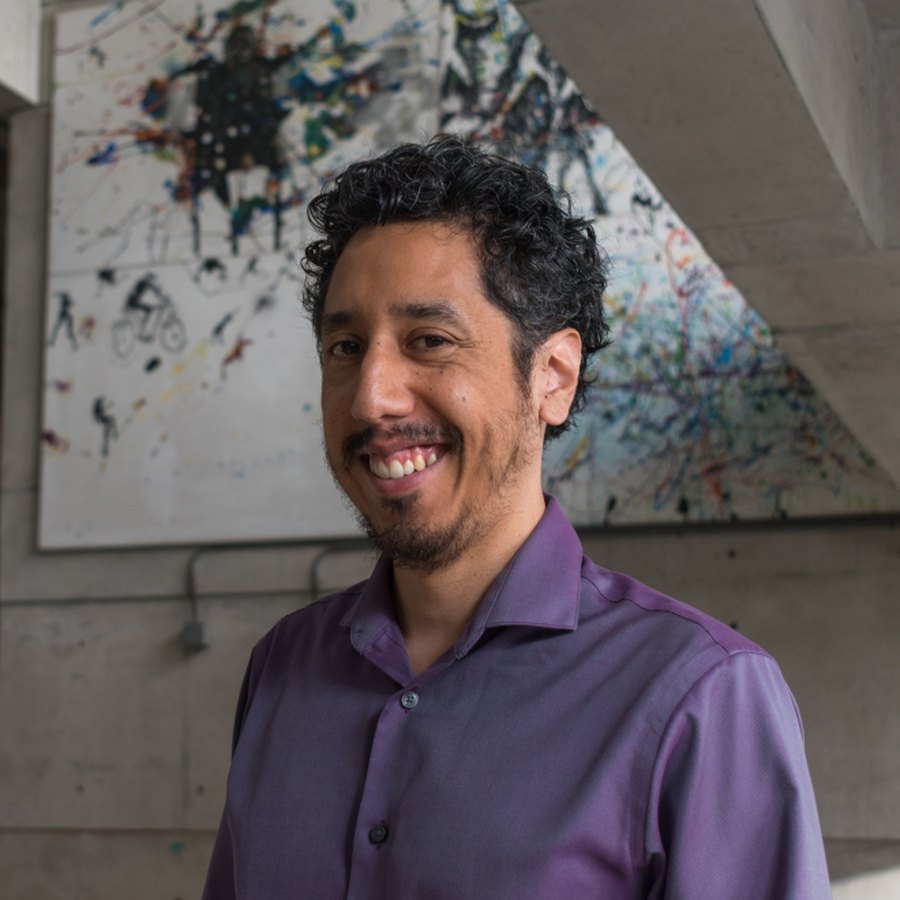
Arturo Deza, PhD
Co-Founder & CEO, Artificio
Robusto-2: Benchmarking Humans & VLMs for Autonomous Driving in Lima & New York City
BIO
Arturo Deza is the CEO and co-founder of Artificio, a neo-lab and autonomous vehicle company in Peru developing robotaxi applications. Before Artificio, he was a Professor of Computer Science at UTEC and a postdoctoral researcher in artificial intelligence at the Massachusetts Institute of Technology (MIT) and Harvard University. He holds a PhD in Dynamical Neuroscience from the University of California, Santa Barbara, and a degree in Mechatronics Engineering from the Universidad Nacional de Ingeniería (UNI). He has published more than 20 papers in leading neuroscience and AI venues, including NeurIPS, ICLR and CVPR.

Omar U. Florez, PhD
Leads the pretraining of LatamGPT
LatamGPT 1.0: Training Latin America's First Foundation Model
What does it take to efficiently train an LLM that understands Latin America's linguistic and cultural diversity?
In this talk, we present LatamGPT, the first LLM trained in Latin America, and discuss the scientific and engineering challenges behind its development. We explore distributed training architectures, data and model parallelism, attention mechanisms, and memory-efficient optimization techniques for scaling LLM training. We also examine how multilingual data curation, curriculum learning, perplexity-based sampling, memory replay, and synthetic data generation can improve training efficiency while preserving regional knowledge and linguistic diversity. Particular attention is given to mitigating catastrophic forgetting during continual pretraining, balancing the acquisition of regional knowledge with the preservation of previously learned capabilities.
Drawing from our experience training LatamGPT across 128 GPUs, we examine how compute-efficient training strategies and data composition influence model capabilities, sharing practical insights and lessons learned from developing and scaling foundation models in Latin America.
BIO
Omar U. Florez is a Peruvian artificial intelligence researcher with a Ph.D. in Machine Learning from Utah State University. He leads the pretraining of LatamGPT, the first large-scale foundation model trained in Latin America. Previously, he spent 10 years as a research scientist at Silicon Valley research labs, including Twitter Cortex, Intel Labs, IBM Research, and Capital One. In 2026, he was honored as a Ken Kennedy Lecturer at the Tapia Conference. He is a co-founder of LatinX in AI, contributed to Peru's first National Artificial Intelligence Strategy, and writes about technology in his weekly column for El Comercio.

Arturo Oncevay, PhD
AI & NLP scientist, multilingual systems and evaluation
Decentralised AI in Peru: Local Models for Local Languages
BIO
Arturo is an AI and NLP scientist specializing in multilingual systems and evaluation. With several years of industry experience as an AI researcher in financial services, he focuses on evaluating LLMs and agentic systems for high-stakes applications. He holds a PhD in Informatics from the University of Edinburgh, and a Master's degree in Computer Science and Informatics Engineering from PUCP.
Arturo also co-organizes open-science events with a focus on machine translation and indigenous languages of the Americas. Through these initiatives and a long-standing collaboration with PUCP (IA-PUCP, Estación Científica Chana), he helps build public benchmarks and open research to make advanced AI accessible for many languages.
Join the conversation with our keynote speakers on November 18–20 at PUCP.
Go to registration
